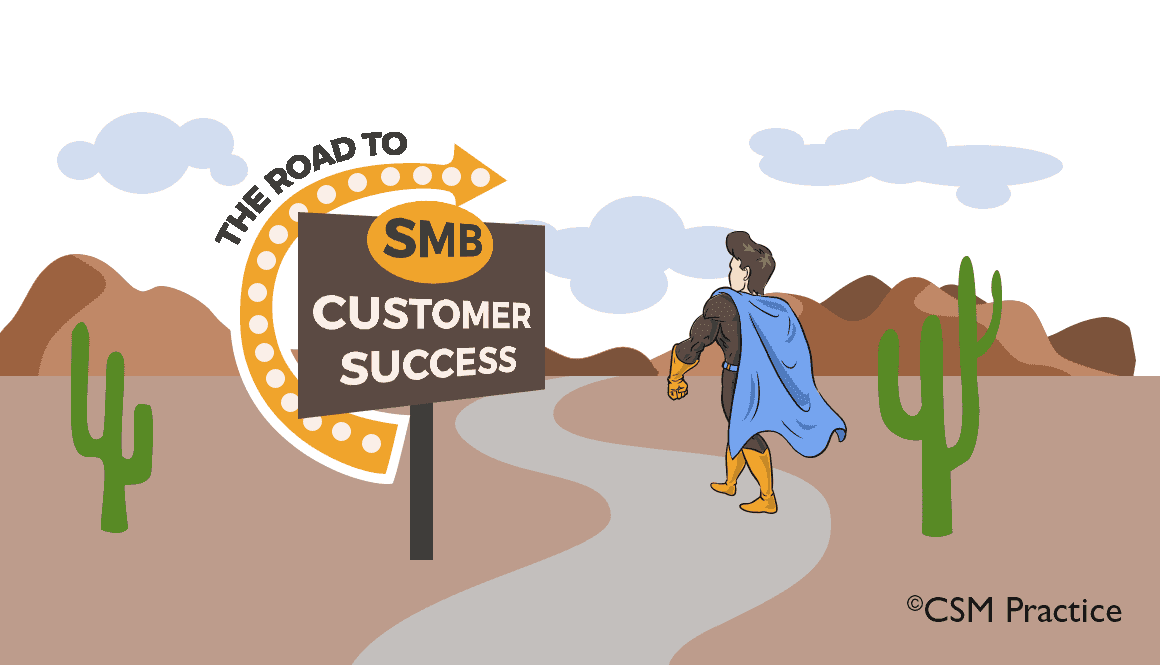
In the context of customer success, SMB stands for Small to Medium-sized Businesses, typically defined by having fewer than 100 employees or lower annual revenue tiers compared to mid-market or enterprise clients. Customer success for the SMB segment focuses on delivering high-impact, scalable value through automated “tech-touch” models and agile operations to ensure long-term retention and sustainable growth.
Key Takeaways
- SMB Definition: Small to medium businesses are agile organizations that require high-value outcomes but often operate with limited internal resources and professional services budgets.
- Scalability is Vital: Success in the SMB segment relies on moving from manual, one-on-one account management to automated, data-driven interactions.
- The Revenue Architect Role: Implementing a unified strategy across sales, marketing, and operations is the most effective way for an SMB to stabilize churn and increase Lifetime Value (LTV).
- AI as an Equalizer: Artificial Intelligence allows smaller firms to provide 24/7 personalized engagement that was previously only available to enterprise-level organizations.
What is the SMB segment in a Customer Success model?
The SMB segment represents the backbone of the economy, consisting of organizations that are often more agile than enterprises but face stricter budget and resource constraints. In a sophisticated customer success model, the SMB tier is usually managed through a “pooled” or “tech-touch” approach. A fractional CRO or Revenue Architect ensures these businesses receive executive-level strategy without the overhead of a full-time C-suite hire.
Unlike enterprise clients who may have dedicated account managers, SMBs require a streamlined experience where the product or service provides immediate, intuitive value. For providers serving this segment, the goal is to create a frictionless journey from onboarding to renewal, ensuring the SMB client achieves their desired outcomes with minimal manual intervention.
Why do SMBs face unique Customer Success challenges?
Small and medium businesses often struggle with the “scale vs. personalization” paradox. They have the entrepreneurial agility to pivot quickly, but they may lack the data infrastructure to predict customer churn or identify expansion opportunities. Chad Crandall, Fractional CRO at Slight Edge, notes that many SMBs fail to retain clients not because of a poor product, but because of fragmented internal processes that create a disjointed customer experience.
Common hurdles include:
- Limited data collection and analysis capabilities.
- High sensitivity to competitive pricing and market shifts.
- Difficulty aligning sales promises with operational delivery.
- Resource constraints that prevent proactive outreach.
How does a Revenue Architect optimize SMB growth?
A Revenue Architect is a strategic professional who designs the commercial infrastructure of a business, ensuring that sales, marketing, and operations function as a single, cohesive unit. A Revenue Architect connects the fragmented dots of a business to transform customer success from a reactive department into a proactive growth engine.
For an SMB, this role is transformative. By auditing the entire customer journey, a Revenue Architect identifies where leads are dropping off and where customers are losing interest. They implement KPIs (Key Performance Indicators) that track the health of the SMB segment accurately, allowing for data-backed decisions rather than “gut feeling” management. This executive-level insight ensures that every touchpoint—from the first marketing interaction to the third year of service—is optimized for revenue retention.
How to leverage AI for SMB Customer Success?
AI-powered solutions act as a force multiplier for SMBs. Because these businesses cannot always hire dozens of support staff, they must use technology to bridge the gap. Strategic AI integration allows SMBs to achieve enterprise-level customer retention by predicting churn signals long before a client cancels.
Key AI applications include:
- Predictive Analytics: Identifying behavior patterns that suggest a client needs help or is ready for an upsell.
- Automated Personalization: Using AI to send tailored training content or check-ins based on how the client actually uses the service.
- Operational Efficiency: Using smart bots to handle routine inquiries, freeing up human staff for high-value strategic consulting.
Why is integrating Sales, Marketing, and Operations critical for SMBs?
In many SMBs, departments operate in silos. Marketing brings in leads, Sales closes them, and Operations (or Customer Success) is left to deal with the aftermath. This lack of alignment is the primary driver of churn. True customer success is achieved when the “Revenue Flywheel” integrates sales, marketing, and operations into a seamless loop of feedback and fulfillment.
When these functions are integrated, marketing campaigns are fueled by actual customer success stories, sales reps set better expectations, and operations can deliver on those promises precisely. This synergy creates a unified brand experience that builds trust and long-term loyalty in sectors ranging from medical spas and healthcare to professional services and finance.
The Strategic Takeaway
The bottom line is that SMB Customer Success is not about doing more with less; it is about doing better with smarter systems. By leveraging the expertise of a Revenue Architect and the power of AI-driven automation, SMBs can build a scalable growth engine that maximizes customer lifetime value and eliminates systemic churn.
Ready to architect a growth engine for your business? Connect with Slight Edge Sales & Consulting today to learn how an embedded growth partner can scale your operations.